What Is the ATSA?
The ATSA is the primary aptitude test used by the FAA to screen Air Traffic Controllers (ATC).
It is a 3.5-hour test designed to simulate the high-stakes environment of air traffic control without requiring prior aviation knowledge. Various abilities are measured, including spatial awareness, short-term memory, multitasking, and decision-making under pressure.
The ATSA is proctored and administered at Pearson Professional Centers (see more details in the Administration section).
Test Structure and Question Format
The test consists of 7 distinct modules, ranging from traditional multiple-choice questions to interactive simulations.
- Number Differences – 20 minutes
- Variable Speed – 20 minutes
- Visual Relationships – 30 minutes
- Prevent Collisions – 45 minutes divided into three 15-minute runs
- Reading Comprehension – 30 minutes
- Logical Reasoning – 20 minutes
- Personality / Biographical (PBQ) – 40 minutes
Let’s cover each module in a bit more detail. All screenshots are taken from ATCPreparation’s ATSA Prep (see more details in the Preparation section).
Number Differences

The Task: A rapid sequence of single-digit numbers appears on the screen. Calculate the absolute difference between the number currently displayed and the one that came immediately before it.
Number of Questions: A single, continuous round.
Time Limit: Approximately 20 minutes.
What it Assesses: Cognitive processing speed and short-term memory under extreme pressure.
Pro Tip
As soon as you type the difference, mentally “trash” the previous number. Focus only on the current digit and the next one to arrive. If you miss a digit, skip it and reset immediately to avoid a “domino effect” of errors.
Variable Speed
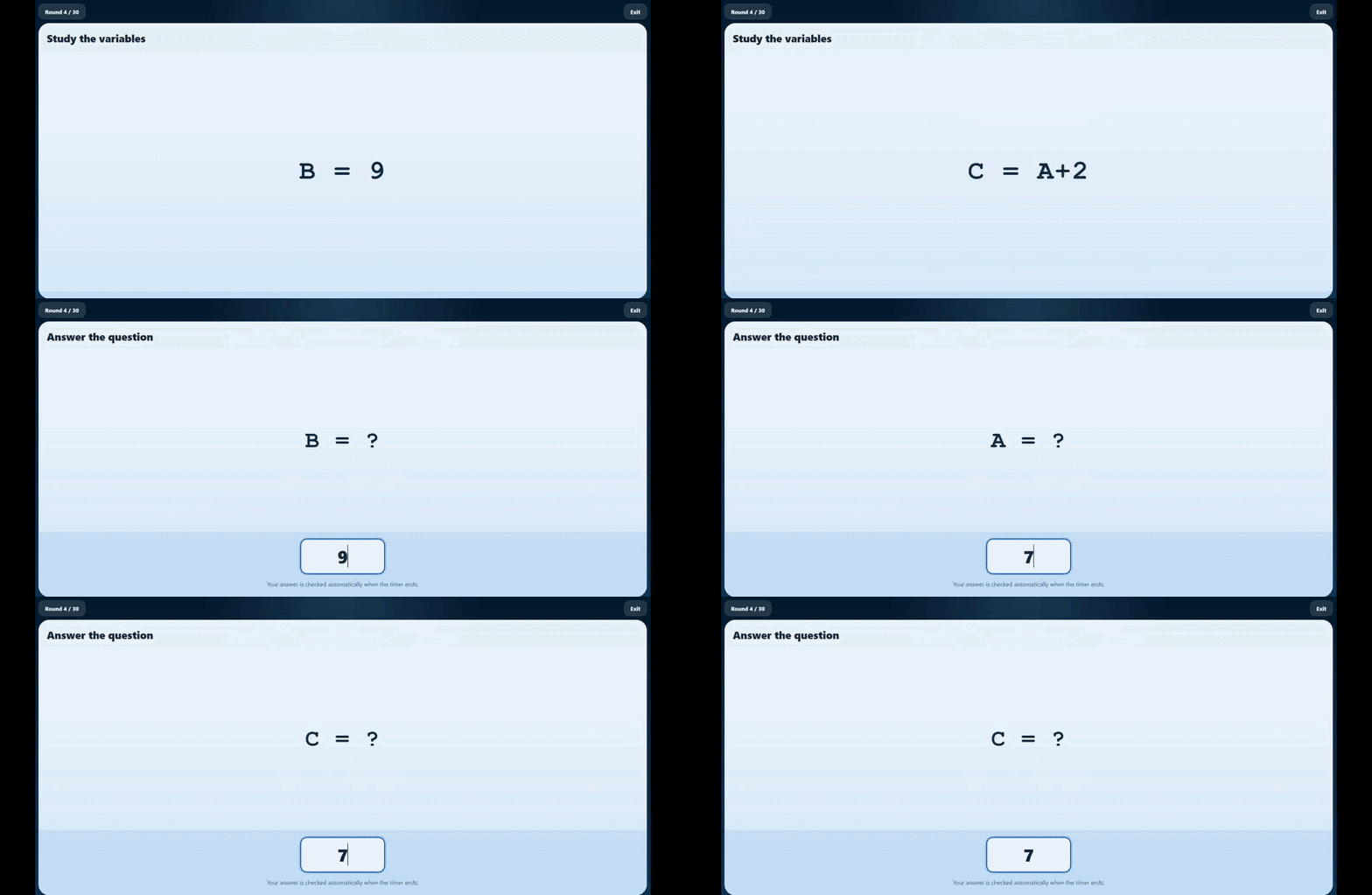
The Task: Values are assigned to variables (e.g., A=7 and B=2). Retain the values in your mind and solve equations based on them.
Number of Questions: 25–30 individual problems.
Time Limit: Approximately 20 minutes.
What it Assesses: Working memory and mental calculation.
Pro Tip
When a new variable is introduced (e.g., C = A + B), perform the calculation immediately so you store only the final value of C, not the entire equation. (In this example, C = 9).
Visual Relationships
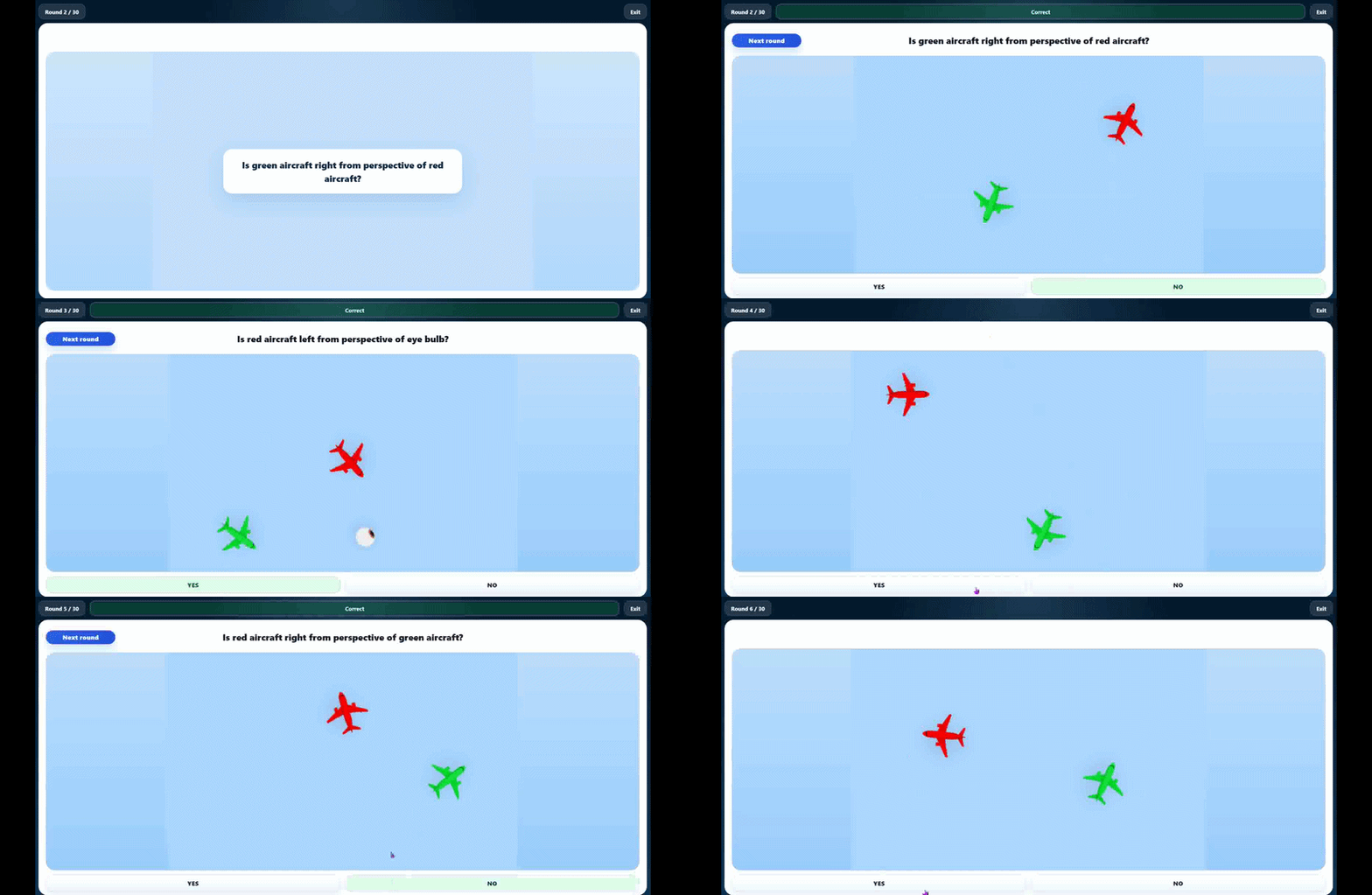
The Task: You are shown an aircraft heading. Determine the orientation of another relative aircraft.
Number of Questions: 40–60
Time Limit: Approximately 30 minutes
What it Assesses: Spatial awareness and the ability to recognize visual relationships from shifting perspectives.
Pro Tip
Engage muscle memory – imagine yourself sitting in the cockpit of the primary aircraft. If the prompt says “the aircraft to your right,” physically tilt your head or hand slightly to the right. This technique often speeds up processing time compared to abstract mental rotation.
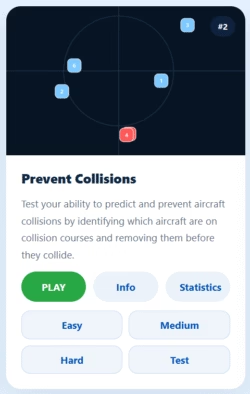
Prevent Collisions
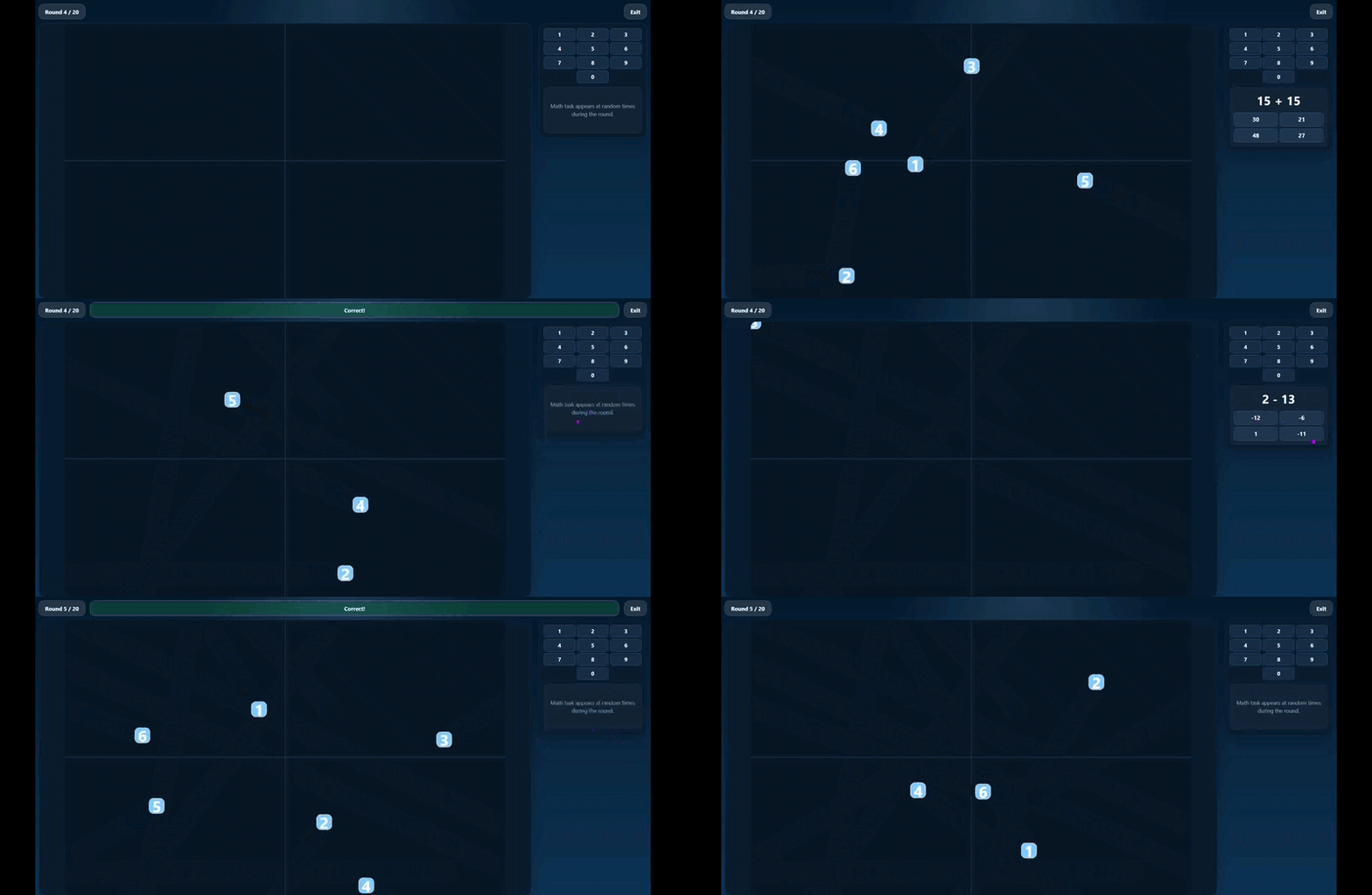
The Task: Navigate aircraft on a radar-style screen to avoid collisions, while simultaneously solving math problems.
Number of Questions: 2-3 runs, 15 minutes each
Time Limit: Approximately 45 minutes
What it Assesses: Multitasking and divided attention.
Pro Tip
Safety First, Math Last. Always resolve aircraft conflicts and prevent collisions before looking at the math problems. A missed math question hurts your score far less than a collision.
Reading Comprehension
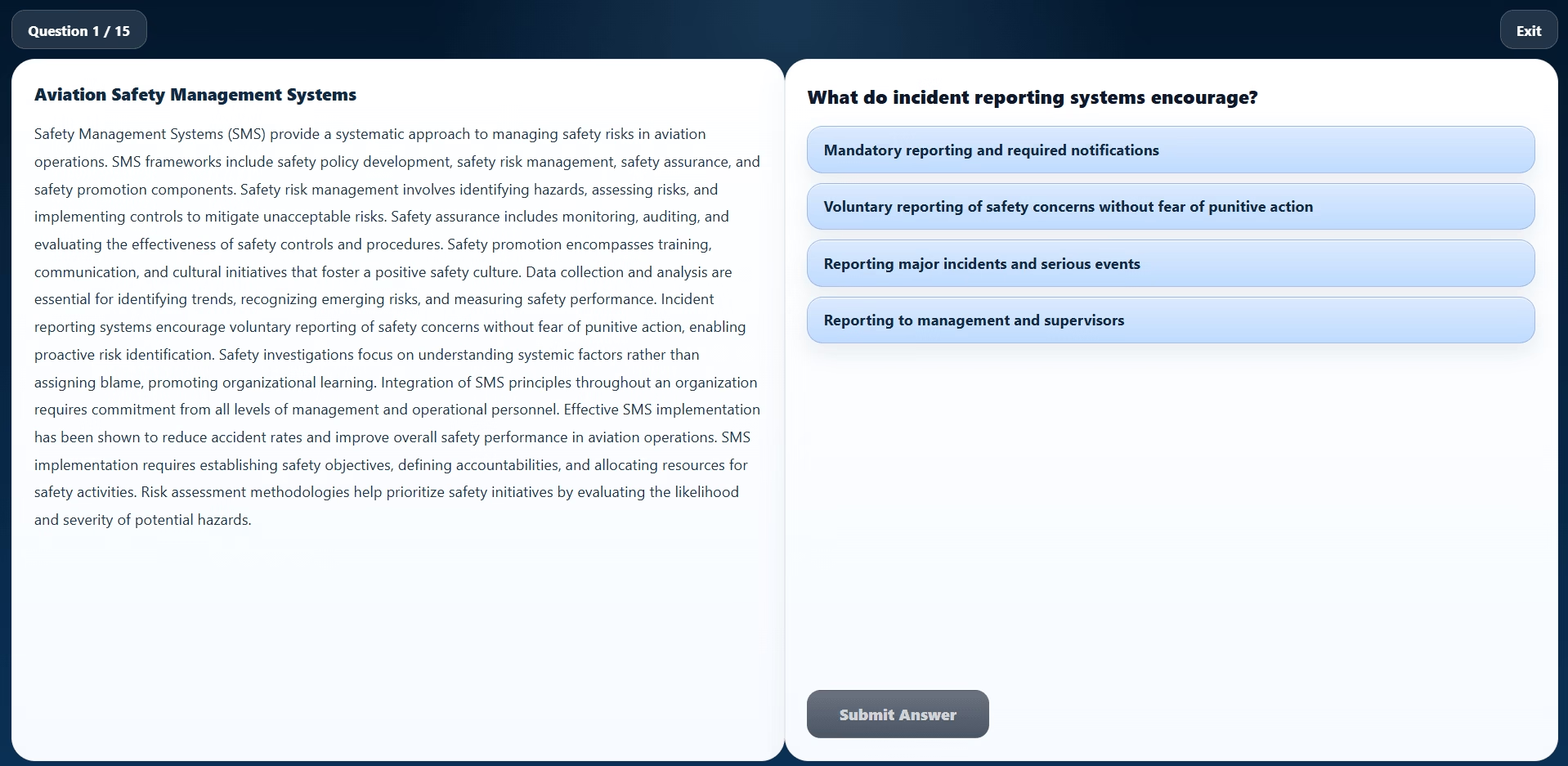
The Task: Several passages followed by several multiple-choice questions testing your understanding of rules or scenarios.
Number of Questions: 5–6 passages
Time Limit: Approximately 30 minutes.
What it Assesses: Information processing and the ability to draw conclusions from complex texts.
Pro Tip
Read the questions before the passage. These texts are often dense. By knowing exactly what data point you need, you can skim for keywords and save valuable time.
Logical Reasoning
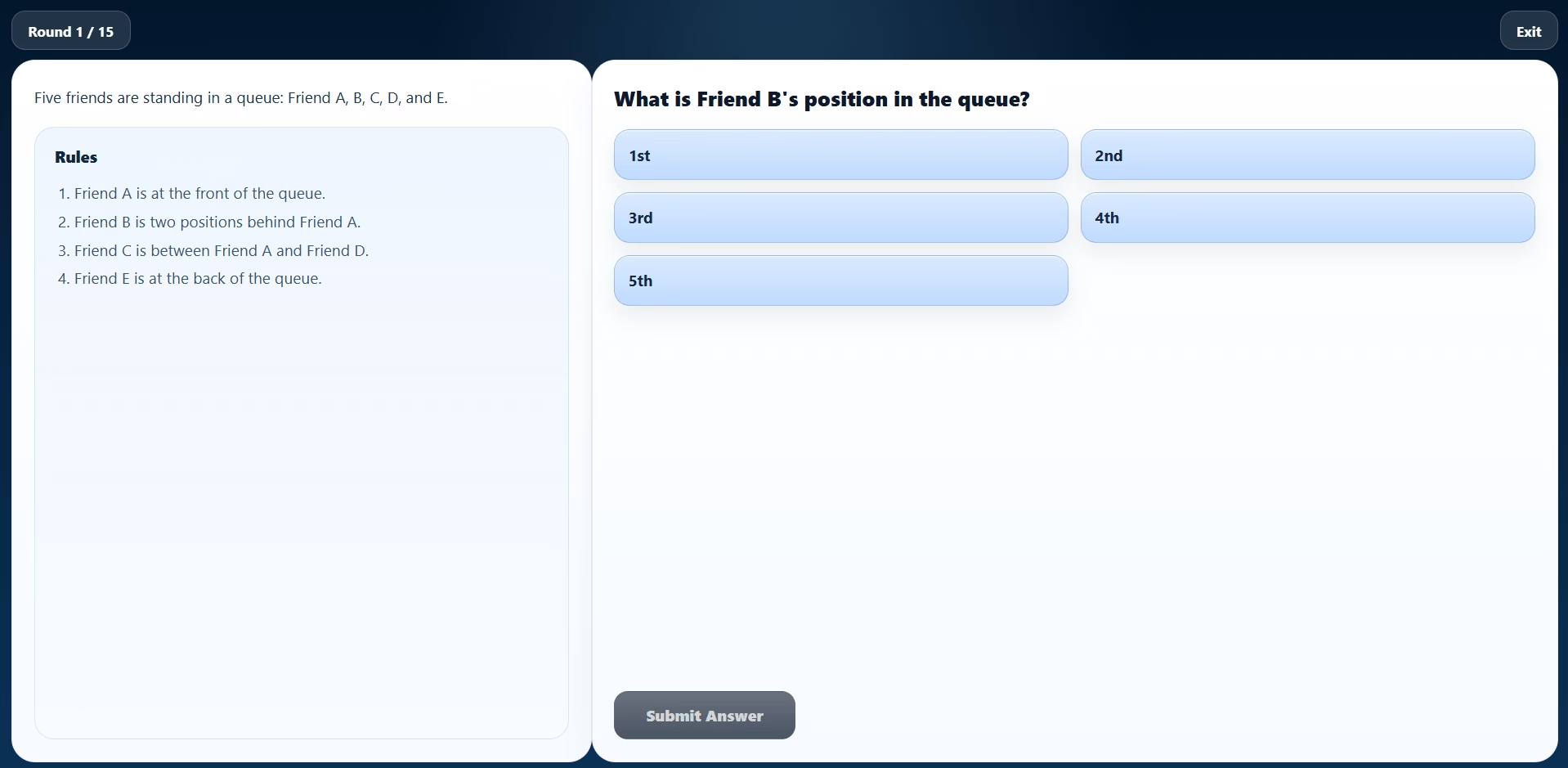
The Task: Determine the only possible logical outcome based on a given set of rules (like seating arrangements or flight arrivals).
Number of Questions: 15–20 scenarios
Time Limit: Approximately 20 minutes.
What it Assesses: Deductive reasoning and the application of complex rules.
Pro Tip
Read the questions before the passage. These texts are often dense. By knowing exactly what data point you need, you can skim for keywords and save valuable time.
Personality / Biographical (PBQ)
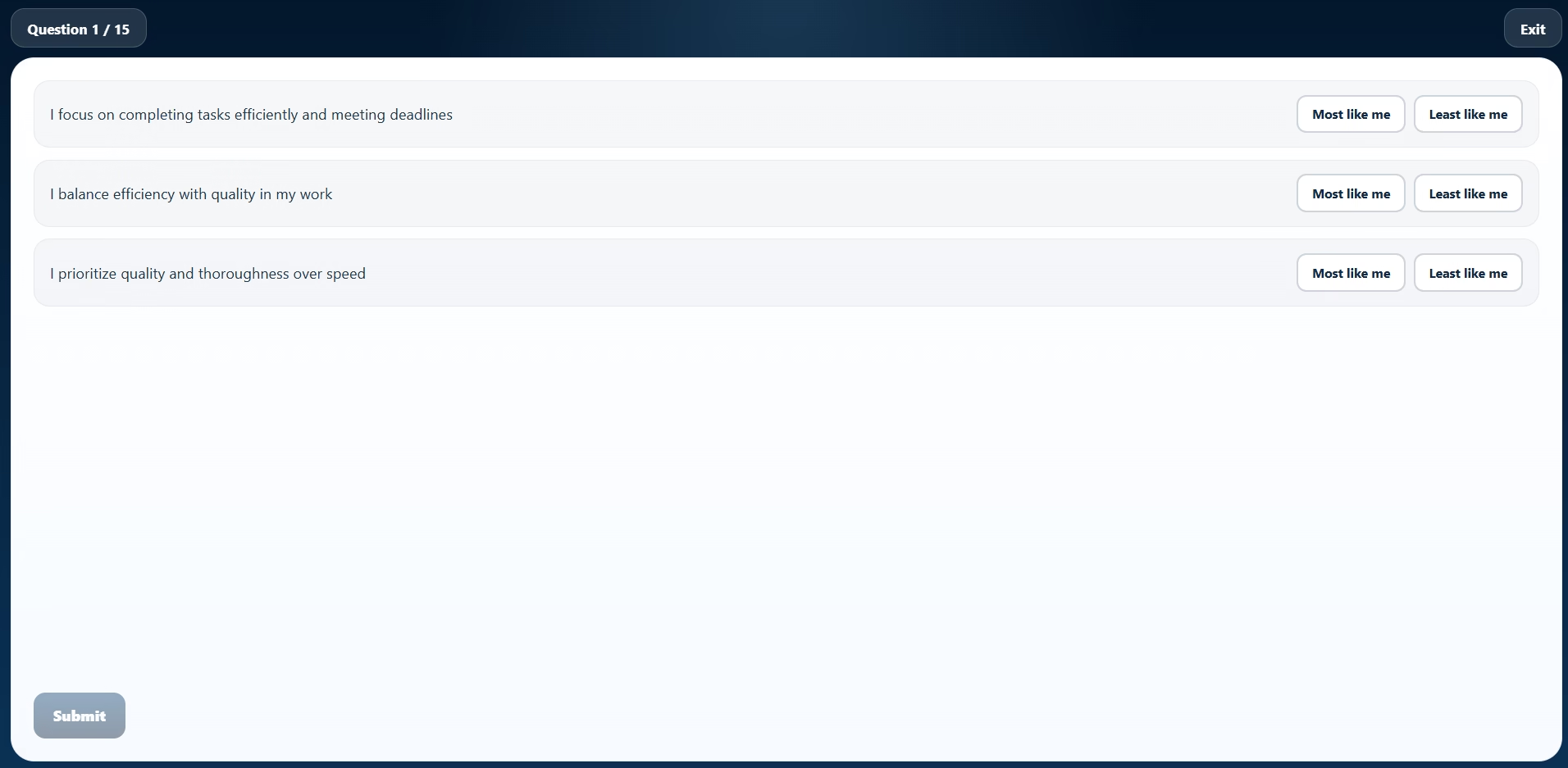
The Task: A battery of forced-choice questions about your work preferences, behavioral traits, and how you handle stress.
Number of Questions: 100+ questions.
Time Limit: Approximately 40 minutes.
What it Assesses: Behavioral fit and consistency.
Pro Tip
Don’t try to answer each question individually. Instead, each question relates to a specific trait. Consider these traits and how they are prioritized as a whole.
ATSA Preparation

I strongly recommend ATCPreparation’s prep course for the ATSA.
★ Accurately simulating the real assessment.
★ Various difficulty levels
★ 6 cognitive ATSA modules + 3 additional modules to strengthen your skills (multitasking, working memory, and spatial processing).
★ Separate personality practice (optional)
Check It Out
Test Invitation
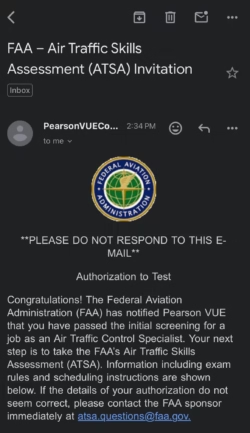
After applying during an open hiring window, eligible candidates receive an invitation to schedule their ATSA.
This invitation usually arrives via email several months after the application window closes. You typically have a small window (often 2-4 weeks) to book the test and take it at a Pearson center (see in Administration section).
ATSA Administration
The ATSA is administered at Pearson Professional Centers (PPC) across the country. To find a PPC near you, see here (select “FAA” from the list).
Test Booking Tips
A few things to know before you book:
- Schedule as early as possible: The longer you wait, the harder it may be to get a spot at your preferred location. Some applicants have had to travel hundreds of miles to the nearest available center. You typically have a 2–4 week window from the time you receive your invitation, so don’t delay.
- What to bring: You’ll need an official government-issued ID that exactly matches the name on your application. Discrepancies can result in being turned away.
- Plan for the full day: The exam takes up to 4 hours of active test time, plus a 30-minute break allowance between the two halves. Arrive early, well-rested, and bring water and a snack for the break.
Pro Tip
The ATSA is split into two separate parts with a break between them. After completing the first four subtests, you must notify the proctor, who will then set up access to the final three sections.
Be prepared for this handoff – it’s a good time to use part of your 30-minute break allowance.
Scoring
The 3 Scoring Tiers
According to Pearson, the test administrator, ATSA scores are categorized into three tiers (the 4-tier system has been discontinued).
- Best Qualified – Prioritized for academy training.
- Qualified – Meets minimum requirements and may advance, depending on hiring needs.
- Not Referred – Does not meet minimum standards and cannot proceed.
The 2 Pools
FAA candidates without prior ATC experience are divided into two pools:
- Pool 1 – military veterans and CTI (Collegiate Training Initiative) graduates.
- Pool 2 – OTS (off-the-street) candidates.
While Pool 1 candidates may advance even with a lower score tier, if you’re a Pool 2 applicant, scoring Best Qualified is essentially non-negotiable.
ATSA Score Validity
Your ATSA results remain valid for 3 years from the date of completion. This offers a major strategic advantage: if a new FAA hiring window opens while your score is still valid, you can choose to reuse it automatically instead of retaking the exam.
Preparation
I strongly recommend ATCPreparation’s prep course. Below I describe all the reasons why. All screenshots are taken from the actual preparation.
Disclaimer: I am affiliated with ATCPreparation. Clicking the links helps me to keep providing you with high-quality, ad-free content.
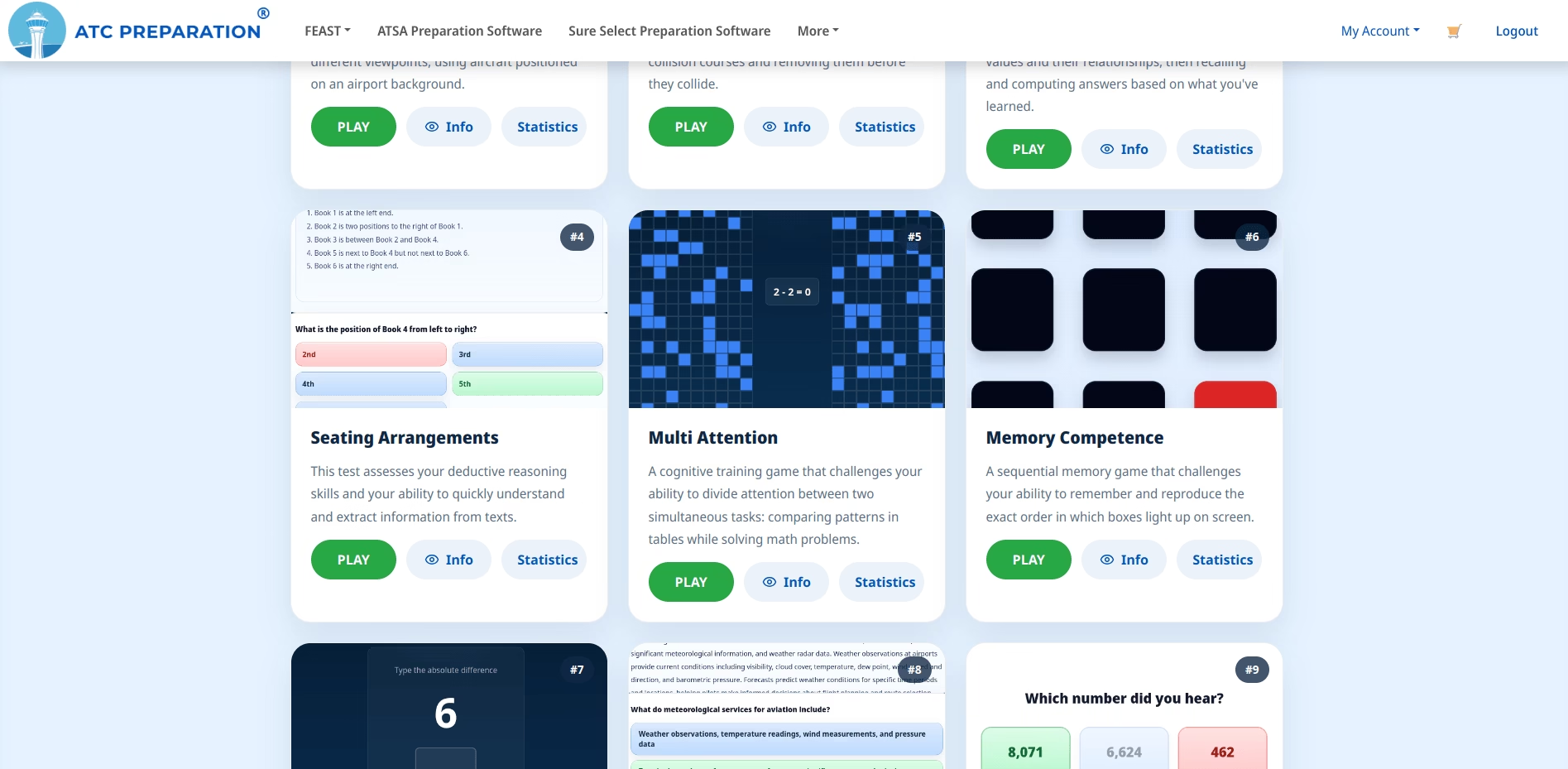
3 Additional Practice Modules
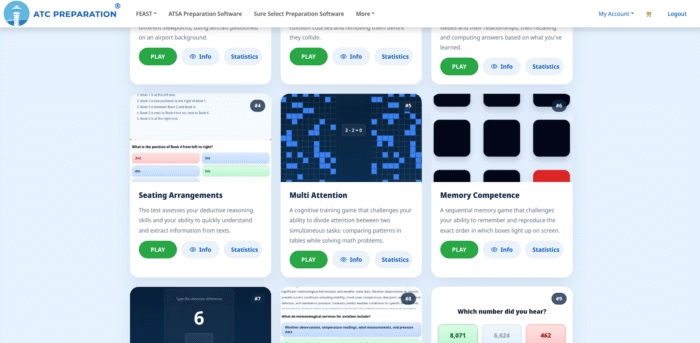
On top of providing full coverage of all 7 ATSA modules, ATCPreparation’s prep course includes three extra modules in its prep. These are designed to further strengthen two core cognitive skills that are crucial for your success in the ATSA – multitasking and working memory.
- Memory Competence
- Multi Attention
- Pick the Number
Prepare with ATCPreparation
Levels of Difficulty + Test Mode
Each module is available in one of three levels of difficulty. The “Hard” level surpasses that of the actual ATSA. Hard in training, easy in battle.
Additionally, you can play in “Test Mode” which precisely emulates the constraints and timing of the actual ATSA module.
Intuitive, User-Friendly Interface
The interface of ATCPreparation’s prep course is modern and intuitive. It includes statistics on your performance and progress, and allows various levels of difficulty for every game.
Fair Pricing
Of all ATSA prep options I am familiar with, ATCPreparation provides the best value for money. The pricing is subscription-based, with plans ranging from 2 weeks to 6 months at very reasonable prices.
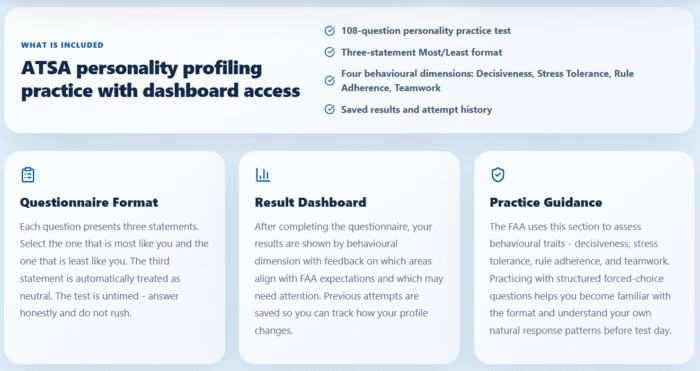
While the preparation for the personality questionnaire is sold separately, it still is a more affordable option than others.
Separate Personality Module
Candidates (and prep providers) often tend to underrate the importance of personality questionnaires in the hiring process.
Unlike other sections of the ATSA, the personality questionnaire may single-handedly determine your fit for the role.
Prepare with ATCPreparation