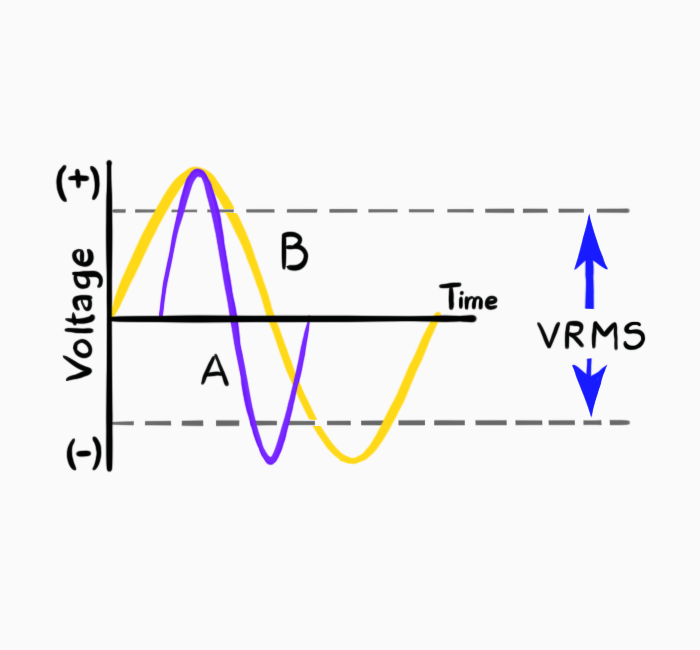
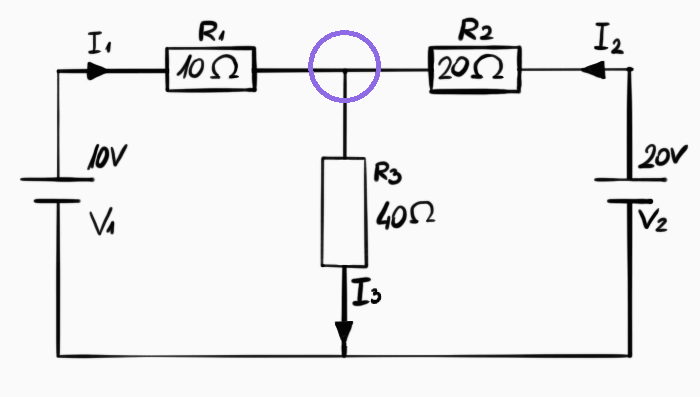
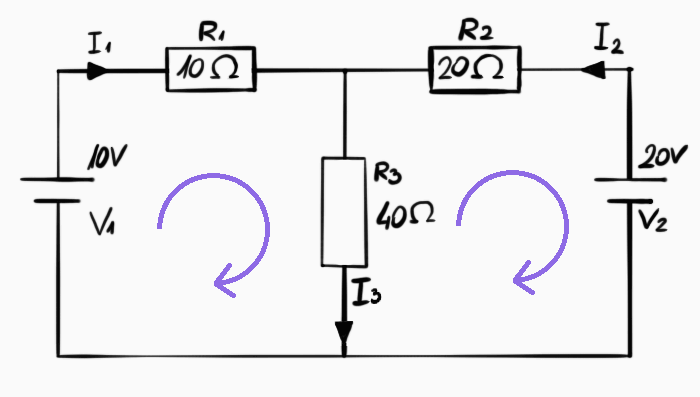
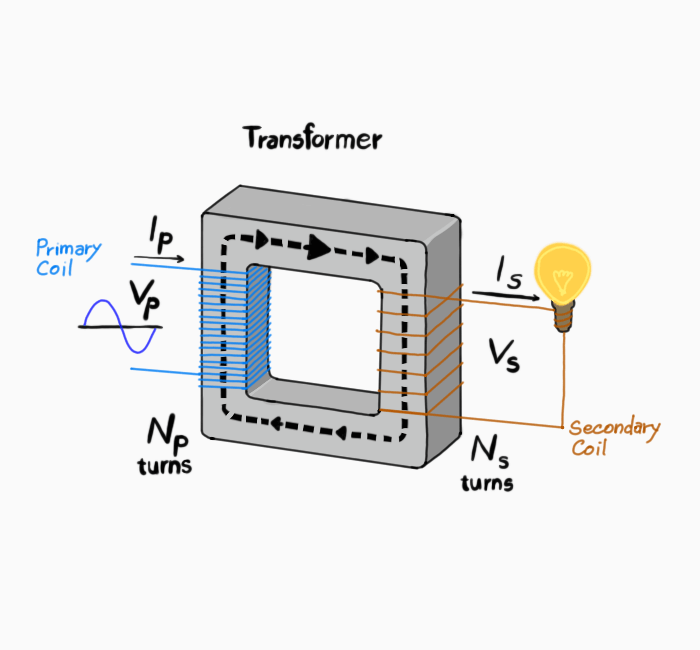
In a single-phase power supply system, the current flows through a single wire in one phase. In a 3-phase power system, on the other hand, the current flows through 3 or 4 wires in three different phases, as seen in the images below.
This, naturally, requires more wiring.
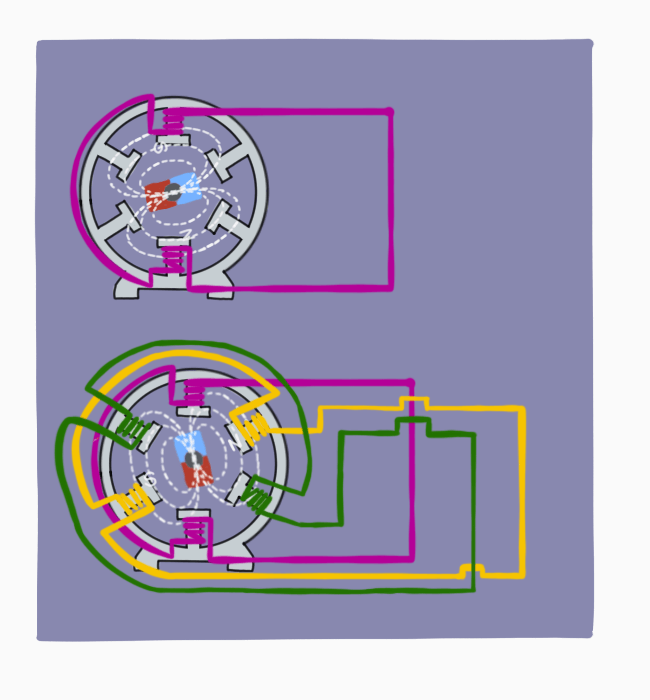
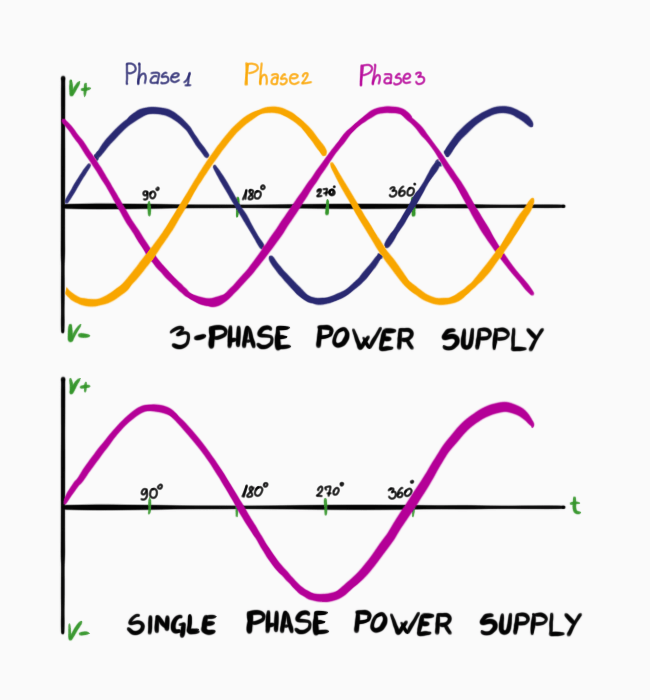
This structure gives 3-phase power systems a variety of advantages over single-phase systems. Let’s break down the major ones:
Advantage #1 – Increased Power
Perhaps the main advantage of a 3-phase power system is the ability to produce more power under the same current. Generally speaking, the power produced from a 3-phase system with current I is 73% higher than that of a comparable single-phase system.
We will not get into a full explanation here, but it is enough to say that this characteristic is derived from the vector geometry of the 3-phase system, and represented in the power formulas:
Single-Phase System Power Formula

3-Phase System Power Formula (for a balanced load with 120 degrees phase angle)

- I is the line current
- V is the line voltage
- Cos(Φ) is the power factor
The √3 factor comes, as we have previously mentioned, from the vector geometry of the three phases. √3 is approximately 1.73, hence the 73% power increase previously mentioned.
All in all, the 3-phase system allows higher power under similar current.
Advantage #2 – Reduced Conductor Size
As we have just seen, transferring the power system into a 3-phase system allows us to produce the same power under lower current.
Since conductor size is generally determined by current, reducing the current means lower conductor size.
Advantage #3 – More Stable Power Output
In a single-phase power system, the power fluctuates in a sinusoidal wave. Alternatively, in a 3-phase system, while the power of each phase fluctuates similarly, the sum of these three phases is constant at any point, as seen in the picture below:
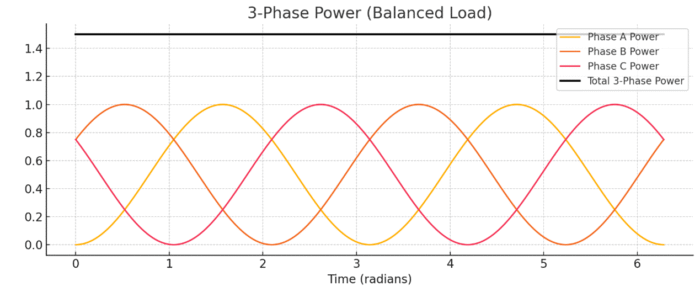
This allows steadier power output.